Imaginary friends at ages 3–5: should I worry?
Pretend companions can be part of childhood play; notice how your child feels about them.
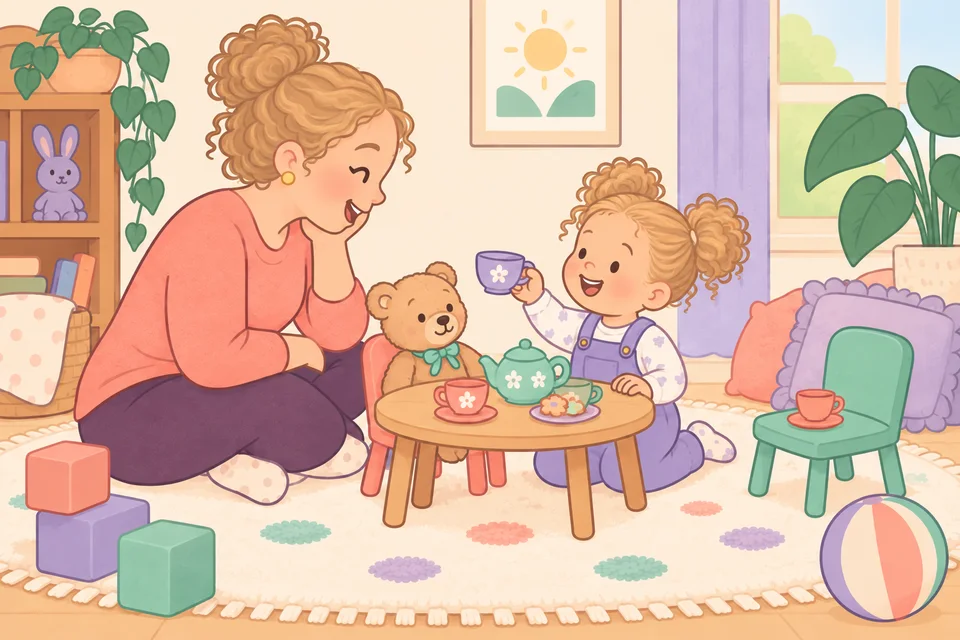
An invented friend may join preschool conversations and games. On its own, this does not show loneliness or a developmental problem. Some children have one and others do not. Show interest without questioning every detail or directing the story. If invited, join as you would a pretend cooking or animal game. Everyday boundaries still apply: even if the friend knocked over the blocks, you can tidy up together. Do not use the character to threaten or control behaviour.
You can try
- Listen to a story or ask “What are you playing?”, leaving your child free to share as much as they like.
- If invited, follow a simple idea. You do not need to create a friend for them or keep the game going all day.
- Keep opportunities for play with other people, and notice whether the experience is enjoyable or frightening.
Reviewed sources

BabyBright, on your phone too
Keep observations, routines and memories in one place. Use BabyBright in your browser or download the app for everyday moments.


My toddler will not play alone: supporting independent play
Ideas for ages 2–4 when your child wants you close, without timed targets or leaving them unsupervised.
Read guide
Indoor activities for 2- and 3-year-olds: three easy play ideas
A block tower, a stuffed animal, and a song: screen-free options for an afternoon at home.
Read guide